Increase your ROAS and conversions by adding these simple changes to your product listing images. 7 years of A/B tests in one e-book. Get expert tips to optimize your listing and boost your sales - all in our FREE e-book!
Selling on TikTok Shop vs Amazon: What Brands Should Know Before They Start (2026)
The same question keeps surfacing in almost every brand strategy conversation we have at INNELS: should we be on TikTok Shop? The honest answer is that it depends — on your product, your operational readiness, and whether you understand what the channel is actually built to do.
Andrey Klimovskij
Co-Founder
TikTok Shop in 60 Seconds: What It Actually Is
TikTok Shop is a native commerce layer built into the TikTok app — available in the US, UK, and several Southeast Asian markets — where creators and brands list products that viewers can purchase without leaving the platform. Unlike Amazon, it runs on algorithmic content distribution, not search intent. A product does not need an established ranking or review history to reach a large audience; it needs a video the algorithm decides to amplify. That single distinction has significant implications for how you acquire customers, plan inventory, and measure success.
TikTok Shop is not a marketplace in the traditional sense. It is a content platform with commerce built in. The traffic is not intent-driven — it is curiosity-driven. Brands that treat those two things the same way tend to have a confusing first few months.” — Founder, Mark Daniel Zalomajev
Who TikTok Shop Actually Works For
TikTok Shop tends to favour products that are visually demonstrable — beauty, skincare, wellness, kitchen gadgets, accessories — at a price point where buyers make decisions without extensive research. Above a certain threshold, or in categories requiring configuration, size verification, or comparison before purchase, the channel struggles. Considered purchases, complex products, and anything that requires a buyer to think carefully before converting are better suited to Amazon. TikTok Shop works best when the video does the persuading.
We ask two questions before recommending TikTok Shop to a client: can the product be understood in under ten seconds of video, and is it the kind of thing someone would buy on impulse? If both answers are yes, the channel is worth serious attention. If either answer is no, there is a different conversation to have first.”— PPC Manager, Niks Saknitis
TikTok Shop vs Amazon: Traffic, Conversion, Trust, and Returns
Amazon captures high-intent buyers who arrive ready to purchase — conversion rates on well-optimised listings tend to be strong because intent is already formed. TikTok Shop reaches people who were not actively looking, generating demand rather than capturing it, but the path from view to conversion is longer and less predictable. Trust architecture also differs: Amazon’s review system, Brand Registry, Prime fulfilment, and A-to-Z guarantee are the result of two decades of infrastructure investment. TikTok Shop is still building its buyer confidence layer, and the true cost of acquiring a satisfied, repeat customer is often higher than the initial view-to-click cost suggests.
Amazon converts well because buyers arrive ready. TikTok converts differently — you are creating the moment of desire rather than catching it. Both have genuine value, but they serve different stages of the customer journey and you need to account for that when setting targets.”— Founder, Andrejs Klimovskis
What You Need to Win on TikTok Shop: Content, Creators, and Offers
Three things need to work together: a content engine, a creator network, and a differentiated offer. The content engine is a repeatable process for producing short-form video at volume — not a launch burst, but an ongoing cadence. The creator network is built through TikTok’s affiliate programme, where creators earn commission on sales they drive; fit matters far more than follower count. The offer needs to be differentiated — bundles, launch pricing, or exclusives — not your Amazon retail price transferred across. Treating any of these three as optional is where brands consistently lose momentum.
The visual identity of a product matters more on TikTok than most brands initially realise — the packaging, the unboxing experience, how it reads on camera. Brands that invest in product presentation with video in mind tend to attract stronger creator adoption and better organic reach. It is a detail that gets skipped when teams focus only on the paid side of things.”— Founder, Andrejs Klimovskis
Common Mistakes: Why Amazon Brands Struggle on TikTok Shop
The most common mistake is applying Amazon logic to TikTok Shop. On Amazon, the levers are keyword strategy, bid management, and listing conversion rate — all measurable from a dashboard. TikTok’s equivalent is creator selection and content hook quality, neither of which responds to the same analytical playbook. Brands that invest their first two months in paid placements without an organic content baseline tend to underperform and leave the channel early. The second failure is inventory: a creator post can drive a demand spike faster than you can reorder, and going out of stock mid-momentum disrupts both the algorithmic signal and the creator relationship.
The brands that find TikTok Shop frustrating are almost always the ones who approach it with pure performance marketing instincts. It rewards creative thinking and relationship building. Teams that skip that foundation and go straight to paid optimisation usually hit a wall within the first ninety days.”— Founder, Mark Daniel Zalomajev
Checklist: Should We Launch TikTok Shop?
Before committing budget and team capacity, work through two areas honestly. The first is product and operational readiness: can your product be demonstrated clearly on video? Does your price point sit within a range where buyers decide without researching extensively? Is your packaging compelling on camera? Do you have a content process capable of publishing consistently — not just for a launch week? Have you identified creators who are a genuine category fit? Is there someone with capacity to manage those relationships? Do you hold enough inventory to absorb a meaningful demand spike? And is a post-purchase plan — covering review collection, repeat purchase incentives, and returns — in place before you go live?
The second area is mindset and measurement. Are you prepared to evaluate TikTok Shop on its own terms rather than against Amazon conversion metrics? Does your team understand this is a demand-creation channel, not a demand-capture one? And does your business have a genuine 90-day commitment to testing and iteration, without expecting profitability in the first few weeks? If the answers are uncertain, those gaps are worth closing before launch — not after.
The clients who make TikTok Shop work treat the first quarter as a learning period, not a return-on-ad-spend test. You are building a content flywheel and a creator network. Once those are established, the model starts to make much more sense — but they do not arrive on their own schedule.”— Founder, Mark Daniel Zalomajev
Final Perspective
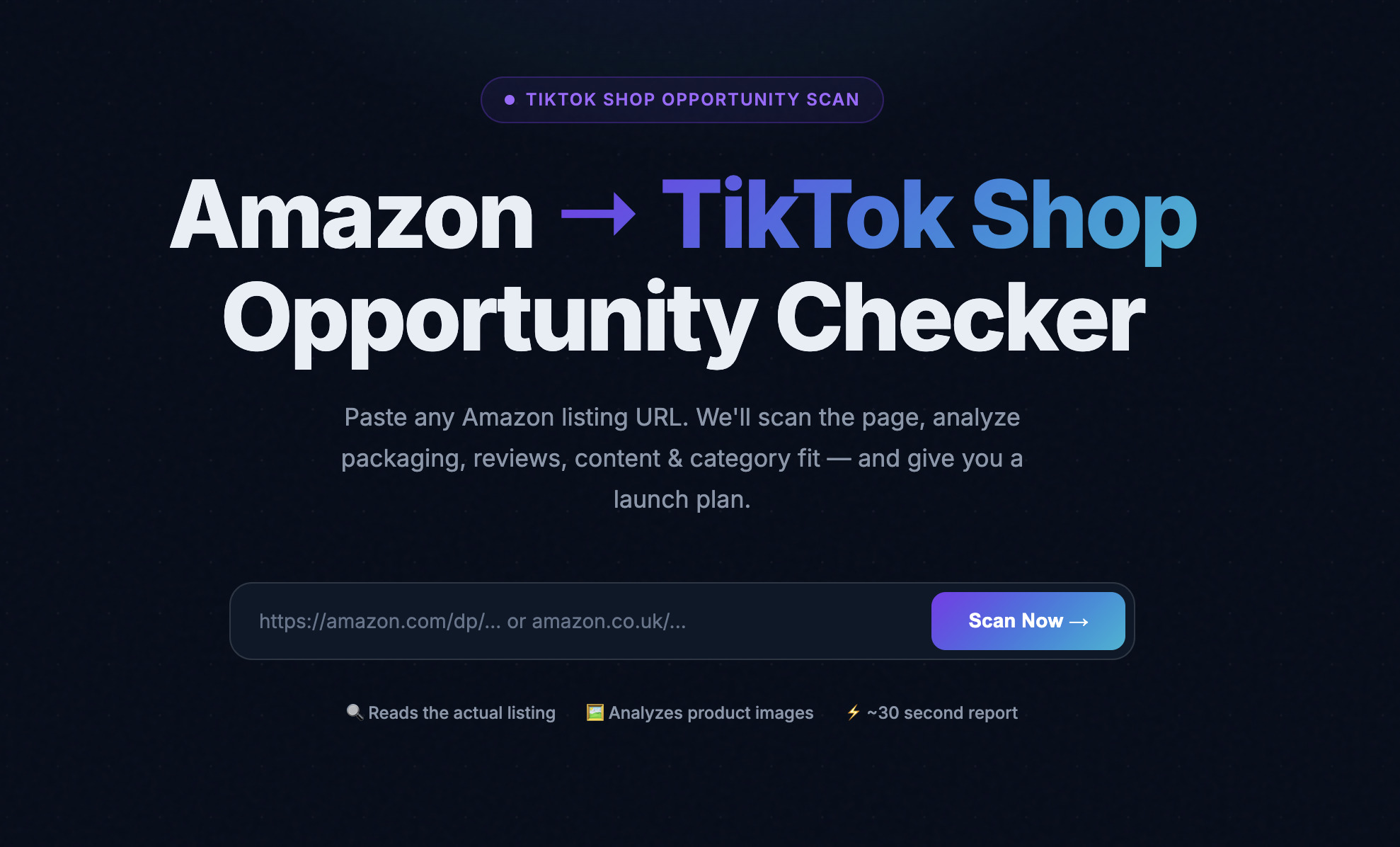
The question is not really TikTok Shop versus Amazon. For brands with the right product profile, the most practical 2026 strategy involves both — Amazon serving the high-intent buyer who arrives ready to purchase, TikTok Shop reaching people who did not know they needed the product yet. They serve different stages of the buyer journey and are more complementary than competitive. What we see consistently at INNELS is that readiness matters more than timing: the brands that struggled were not the ones who launched late, they were the ones who launched without the content infrastructure, creator relationships, and operational depth the channel requires. If the foundations are in place, TikTok Shop is a viable growth channel. If they are not, that is useful information — and your resources are better spent where they will actually work. https://check.innels.com/tiktok-checker/ paste your Amazon listing URL to get your TikTok Shop readiness score.
No — you apply through TikTok’s Seller Centre and can list products once your business is verified, regardless of follower count. That said, having some content on your brand account before launch does help buyers who check the profile before purchasing.
Yes — neither platform has exclusivity requirements, and running both simultaneously is what most brands end up doing. The main thing to plan carefully is inventory allocation across fulfilment channels.
Both platforms charge a percentage-based commission that varies by category, and both have changed their fee structures since TikTok Shop launched. Check the current schedules in each platform’s Seller Centre directly before projecting margins — any figures elsewhere may be out of date.
Creators browse a product marketplace, choose what they want to promote, and earn a commission you set for each sale they generate. You make the product available; the creator decides whether and how to feature it in their own content.
Both options exist — you can send inventory to TikTok-managed warehouses and have orders fulfilled from there, or handle shipping yourself. The right choice depends on your order volume and existing logistics setup.
As of 2026, TikTok Shop operates in the US, UK, and several Southeast Asian markets including Indonesia, Thailand, Vietnam, the Philippines, Malaysia, and Singapore. Check TikTok’s Seller Centre for the most current market availability before planning cross-border inventory.
TikTok Shop has a platform-managed returns and dispute process, but it is less automated and less buyer-familiar than Amazon’s. Having a clear returns policy on your store page and responding to disputes promptly are the most important things you can control as a seller.
Ninety days is a more honest minimum than the four-to-six weeks some brands expect — building a creator network and iterating on content hooks takes time. Brands that use that window for testing and relationship building tend to be in a much stronger position to scale afterward.
Not without adapting them — Amazon copy is built for a buyer who is already comparing options, while TikTok Shop visitors have just watched a video and are in an impulse moment. Shorter, more conversational copy and lifestyle-led images tend to work better on TikTok Shop than Amazon-optimised creative.
It is a format where sellers or creators host live streams with purchasable product overlays in real time — well established in Southeast Asia, still developing in the US and UK. You do not need it to sell on TikTok Shop, but it is worth testing if your product demonstrates well and you have someone comfortable presenting on camera.



%20(1).png)



















.png)


.jpg)


.jpg)
.jpg)

.jpg)